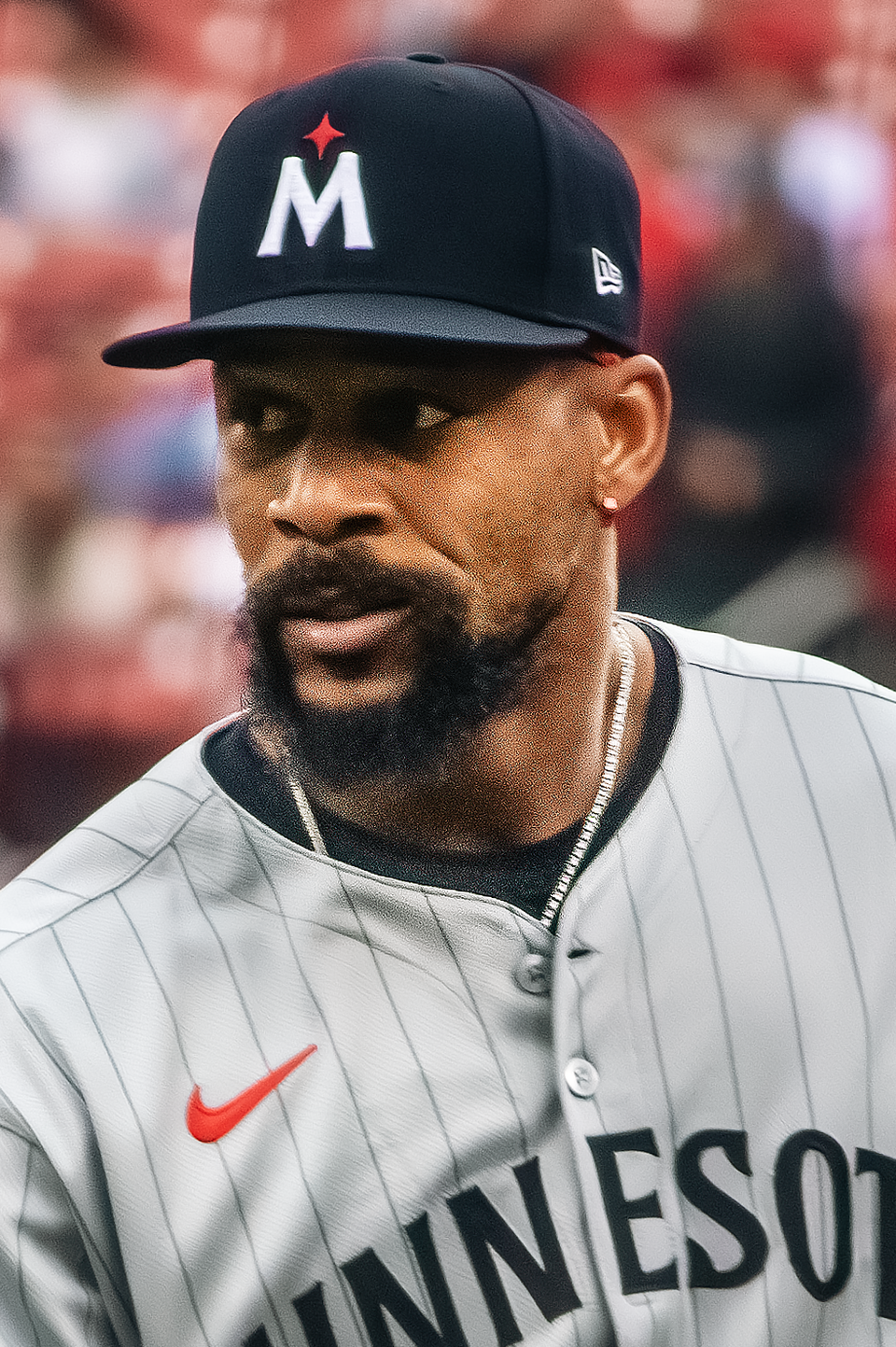
Byron Buxton's World Baseball Classic Quandary: Navigating the Center Field Gauntlet
As the baseball world turns its attention to the electrifying World Baseball Classic (WBC), one of the most compelling storylines emerges from the United States roster, specifically involving the Minnesota Twins' dynamic outfielder, Byron Buxton. After a standout 2025 season, anticipation swirls around Buxton's performance, contingent as always on his ability to stay on the field. Yet, before he dons his Twins uniform for Opening Day, Buxton faces a unique dilemma with Team USA: securing his preferred position in center field amid fierce competition.
The United States aims to reclaim WBC glory, having last won in 2017. To do so, they've assembled a formidable squad, including a star-studded outfield. But for the twins star center field, the question isn't just about making the team, but about playing his prime position. This situation presents a fascinating tactical challenge for Team USA manager Mark DeRosa and a crucial test for Buxton as he navigates a landscape of elite talent.
The "Center Field Only" Conundrum for Team USA
Reports and insights from Twins manager Rocco Shelton suggest that while there's no written agreement dictating Byron Buxton's usage, the expectation from the Twins is clear: when on the field for Team USA, Buxton will primarily serve as either the center fielder or the designated hitter (DH). This unofficial understanding, while not a hard demand, places significant pressure on the Team USA coaching staff to manage their deep roster effectively.
The DH option immediately hits a snag, however, with the presence of Kyle Schwarber. Schwarber is a pure designated hitter, exceptionally good at his specialized role, making him the obvious choice for most DH duties. This effectively pushes Buxton's playing time almost exclusively to center field if Team USA adheres to the Twins' implicit preference. Such a scenario creates a direct positional clash with another rising defensive phenom.
From a player's perspective, the desire to play a specific position, especially one as demanding and specialized as center field, is understandable. For Buxton, center field isn't just a position; it's where he has carved out his identity as one of baseball's most electrifying, if injury-plagued, athletes. Playing out of position, or even in a corner outfield spot, might not only feel unfamiliar but could also carry perceived risks for a player with his injury history. Maintaining peak performance and comfort in his natural habitat could be a driving factor behind this preference, even if it’s not an explicit "demand."
Byron Buxton vs. Pete Crow-Armstrong: A Deep Dive into the Battle for CF
The crux of Buxton's dilemma lies in the presence of Pete Crow-Armstrong (PCA), the young Chicago Cubs outfielder who is rapidly establishing himself as a defensive marvel. The Team USA outfield also includes heavy hitters like Aaron Judge and the recently called-upon Roman Anthony (replacing the injured Corbin Carroll), but the true head-to-head battle for center field is between Buxton and Crow-Armstrong. This isn't merely a contest of skill; it's a fascinating study in balancing experience, offensive prowess, defensive brilliance, and age.
Byron Buxton: Experience and Offensive Firepower
- Offensive Impact: When healthy, Byron Buxton is an offensive force. His 2025 season was a testament to his ability to drive the ball and change the game with one swing. He brings a blend of power and speed that is difficult to replicate, providing a veteran presence in the lineup.
- Defensive Evolution: At 32 years old, Buxton remains a very good defensive outfielder. In 2025, he still posted 3 Outs Above Average (OAA) and 2 fielding value runs, indicating he's far from a liability. However, years of battling injuries have taken a slight toll, and he's not quite the same jaw-dropping defensive wizard he was a decade ago at 23.
- WBC Stakes: For Buxton, this WBC offers a chance to represent his country on a global stage, potentially boosting his profile and confidence heading into the MLB season. His track record of big moments could be invaluable in a high-pressure tournament.
Pete Crow-Armstrong: The Defensive Sensation
- Elite Defense: PCA is currently considered one of the top two or three center fielders in Major League Baseball. He's coming off a Gold Glove season, and those who've watched him with the Cubs describe his play as "absurd" and "absolutely incredible." He has exclusively played center field in the majors, showcasing an unparalleled mastery of the position.
- Youthful Exuberance: A decade younger than Buxton, Crow-Armstrong brings youthful energy and truly elite, uncompromised athleticism to the outfield. His range, instincts, and arm are arguably unmatched by any other center fielder in the game right now.
- Offensive Development: While his defense is generational, PCA is still developing as an offensive player. He doesn't possess the same established offensive firepower as Buxton at this stage of his career, which is the primary trade-off when considering him for the starting role.
This comparison sets up a classic baseball dilemma: Do you prioritize the offensive upside and veteran experience of a slightly diminished but still excellent defender in Buxton, or do you opt for the generational defensive prowess of Crow-Armstrong, hoping his bat will be adequate in a short tournament? Team USA manager Mark DeRosa will need to weigh these factors carefully, considering the unique demands of WBC play where every run and every out carries immense weight. For a deeper dive into their head-to-head matchup, check out our analysis: Buxton vs. Crow-Armstrong: Who Starts Center Field for Team USA?
Beyond the WBC: Implications for the Twins and Buxton's Future
Regardless of how the center field battle plays out for Team USA, the situation holds significant implications for the Minnesota Twins. For a franchise that deeply values the center field position, as highlighted in "Twins Top Ten: Center Field" which shows the incredible bWAR generated by their center fielders over the years, Byron Buxton is more than just a player; he's the embodiment of their current defensive and offensive aspirations in the outfield. For the Minnesota Twins, their twins star center field, Byron Buxton, represents not just a player but a significant investment, both financially and in terms of their team's identity.
The Twins have no plans to move Buxton to a corner outfield spot, recognizing his continued value in center. His ability to cover ground and make highlight-reel plays, even with the accumulated wear and tear of a decade of professional baseball, is crucial to their defensive scheme. A successful, injury-free WBC experience – whether as the everyday center fielder or in a more limited role – could be a huge confidence booster for Buxton as he transitions into the MLB regular season.
However, if Buxton's playing time is significantly reduced, or if he's asked to play a role he's uncomfortable with, there could be lingering effects on his mindset or rhythm heading into the Baltimore opener on March 26. The Twins will undoubtedly be monitoring his WBC usage closely, hoping for a positive outcome that sets him up for another impactful season. The legacy of Twins Center Field Legacy: From Past Stars to Buxton's WBC Quest continues to evolve with every season.
Practically, this WBC scenario serves as a reminder of the strategic depth required in modern baseball. Teams must be prepared for unforeseen circumstances (like Corbin Carroll's injury) and have versatile players. For Team USA, managing a roster of elite talents who are accustomed to being everyday starters or stars on their respective MLB teams is a challenge in itself. It highlights the importance of clear communication between national teams and MLB franchises regarding player usage, health, and expectations.
Conclusion
Byron Buxton's journey to the World Baseball Classic presents a compelling narrative of ambition, competition, and strategic decision-making. His unspoken desire to play center field for Team USA, while understandable for a player of his caliber and history, puts him in direct contention with the generational defensive talent of Pete Crow-Armstrong. Team USA faces the enviable but difficult task of balancing offensive firepower with defensive mastery, all while aiming to bring home a championship. For the twins star center field, this WBC experience will be a pivotal moment, setting the tone for his upcoming MLB season and adding another fascinating chapter to his remarkable career.